







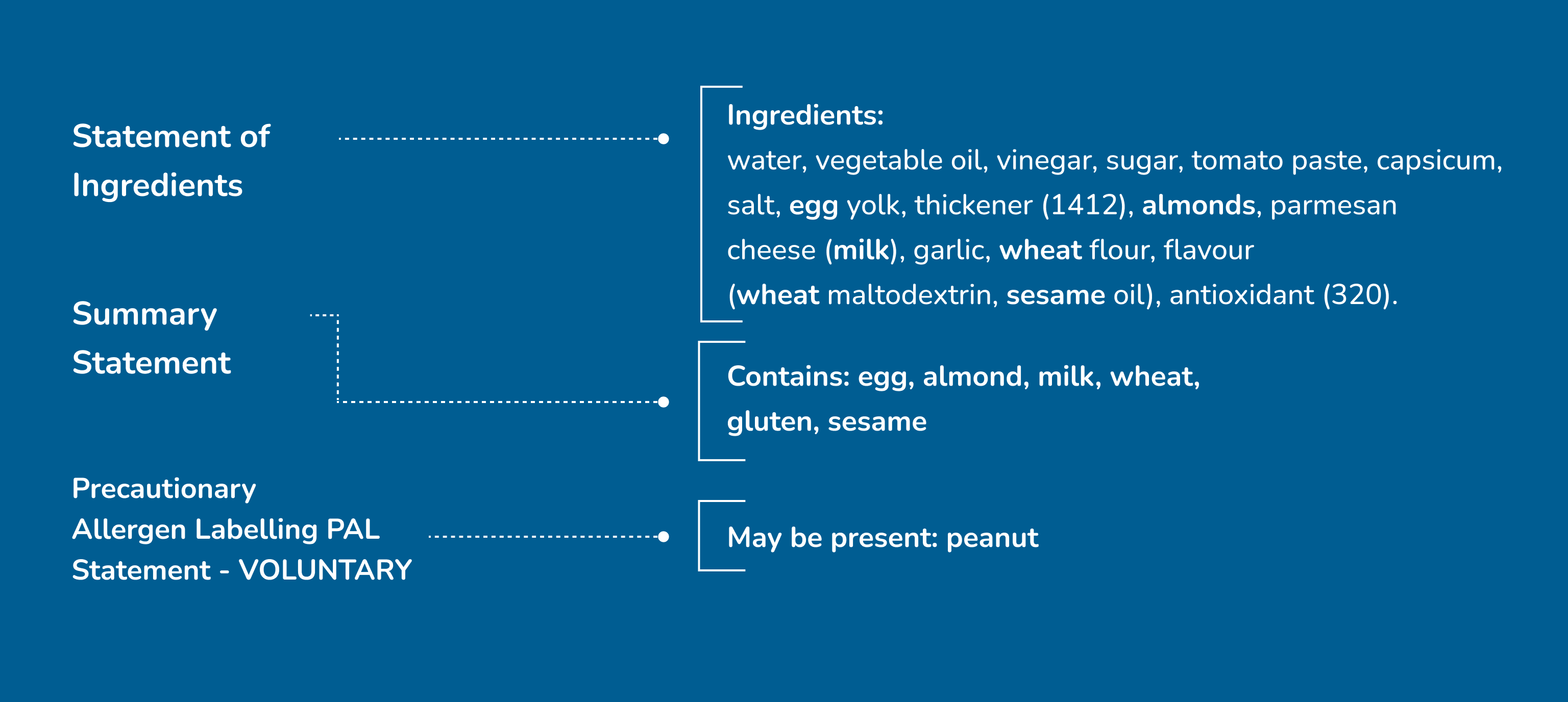
Precautionary Allergen Labelling (PAL) is commonly expressed as “May Contain” or “May Be Present”. This is used when a food manufacturer identifies a potential risk of unintended allergen cross-contact during production.
“May Contain” statements are voluntary and are not regulated by the Food Standards Australia New Zealand (FSANZ) Food Code. It is the Allergen Bureau who provides industry guidance and administers the voluntary VITAL® (Voluntary Incidental Trace Allergen Labelling) Program, which provides a standardised approach to assessing allergen cross-contact risk.
Importantly, PAL is different from mandatory allergen labelling. In Australia, when wheat, barley, rye or oats are intentionally present as an ingredient, they must be declared according to the FSANZ Food Standards Code. PAL relates only to unintended cross-contact.
What is changing?
Rather than applying a warning simply because a theoretical possibility of cross-contact exists, guidelines have now been introduced to make PAL warnings more consistent, risk-based and meaningful,
In 2025 / 2026, following an expert consultation convened by the Food and Agriculture Organization (FAO) and World Health Organization (WHO) and relevant coeliac disease and food testing experts, the Codex Committee on Food Labelling agreed to a 4 mg reference dose for gluten per serving of food, for use in risk assessment of cereals containing gluten. This was adopted by the Codex Alimentarius Commission.
This reflects that a 4 mg dose of gluten may cause a reaction in the most sensitive 5% of people with coeliac disease, while being tolerated by 95%. This threshold is known as the eliciting dose (ED05). Extensive dietary modelling was undertaken using the quantities of food typically consumed throughout the day to ensure that total gluten exposure remained below 10 mg per day, the quantity on which the international gluten free food standards have been based as an upper gluten level.
The Allergen Bureau has updated their VITAL® program to include a risk reference dose for gluten.
Action Level 1
When the cross-contact gluten is present in a standard serving quantity of food, at an amount equal to or less than 4 mg gluten reference dose → PAL is not required.
Action Level 2
When cross-contact gluten is present in a standard serving size of food, at an amount greater than the 4 mg gluten reference dose → PAL is required.
Key Takeaways:
-
 May Contain is voluntary in Australia and most other parts of the world.
-
It will take time for manufacturers to choose to implement this change and update their risk assessments and labelling.
-
PAL is not regulated by the Food Standards Code.
-
PAL does not mean that gluten is definitely present.
-
PAL does not provide information about the amount of gluten that may be present.
-
The risk of consuming a clinically significant amount of gluten is low.
-
Australian gluten-free requirements remain unchanged.

Coeliac Australia’s Position
Current advice recognises that the decision to consume foods carrying a “May Contain wheat or gluten” statement is a personal one. Individuals vary in their tolerance to gluten and desire to take risks. Each person needs to consider factors such as their medical history, disease recovery, symptom experiences, lifestyle, and personal preferences when making this decision. What feels acceptable to one person may not feel acceptable to another.
However, while occasional consumption of these products is likely to present a low risk for most people with coeliac disease, Coeliac Australia does not recommend frequent or daily consumption of foods carrying gluten-related PAL statements.